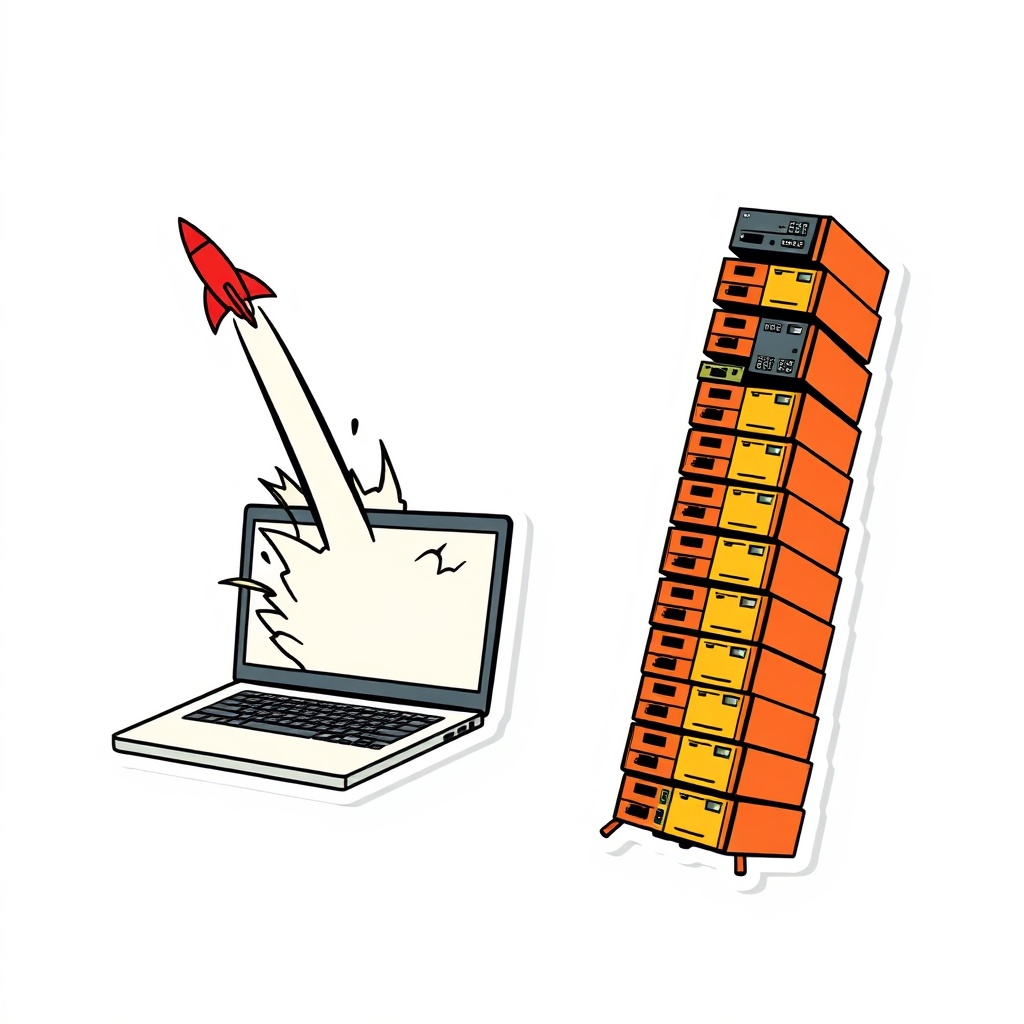
Vibe coding vs traditional development
One dev with AI ships what a team of ten ships in a month. Here's what changes, what stays the same, and what your CTO won't admit
AI now generates 41% of all code — 256 billion lines in 2024 alone
The split between “dev who uses AI” and “dev who doesn't” is the biggest productivity gap in the history of the field. Bigger than the IDE. Bigger than version control
What changes
The unit of work. Used to be a function. Then a file. Now a feature. A senior thinks in features and lets the model type the files
The clock. A week becomes a day. A month becomes an afternoon. GitHub's study on Copilot clocked devs at 55% faster on tasks. The math compounds
The team shape. Five mid-level devs no longer outproduce one senior with Cursor. The pyramid is upside down. The person at the top does the typing
What stays the same
Architecture still matters. Taste still matters. Knowing why something broke at 3am still matters. AI doesn't save you from any of that. It just shortens the gap between idea and shipped
Code review matters more, not less. The 45% of devs in the 2025 Stack Overflow survey who say they spend more time debugging AI code than writing it? They skipped this step. A senior reads everything the model writes. A junior trusts it
What your CTO won't admit
That the team of ten was a comfort blanket. That two of them were doing all the work. That the org chart was inflated to justify the manager layer. That one senior with AI could've replaced six of those seats last year and your runway would be twice as long
The honest answer
Vibe coding doesn't replace developers. It replaces bad ones. It replaces slow ones. It replaces the ones who needed three sprints to ship a CRUD form
The good ones got faster. The bad ones got exposed